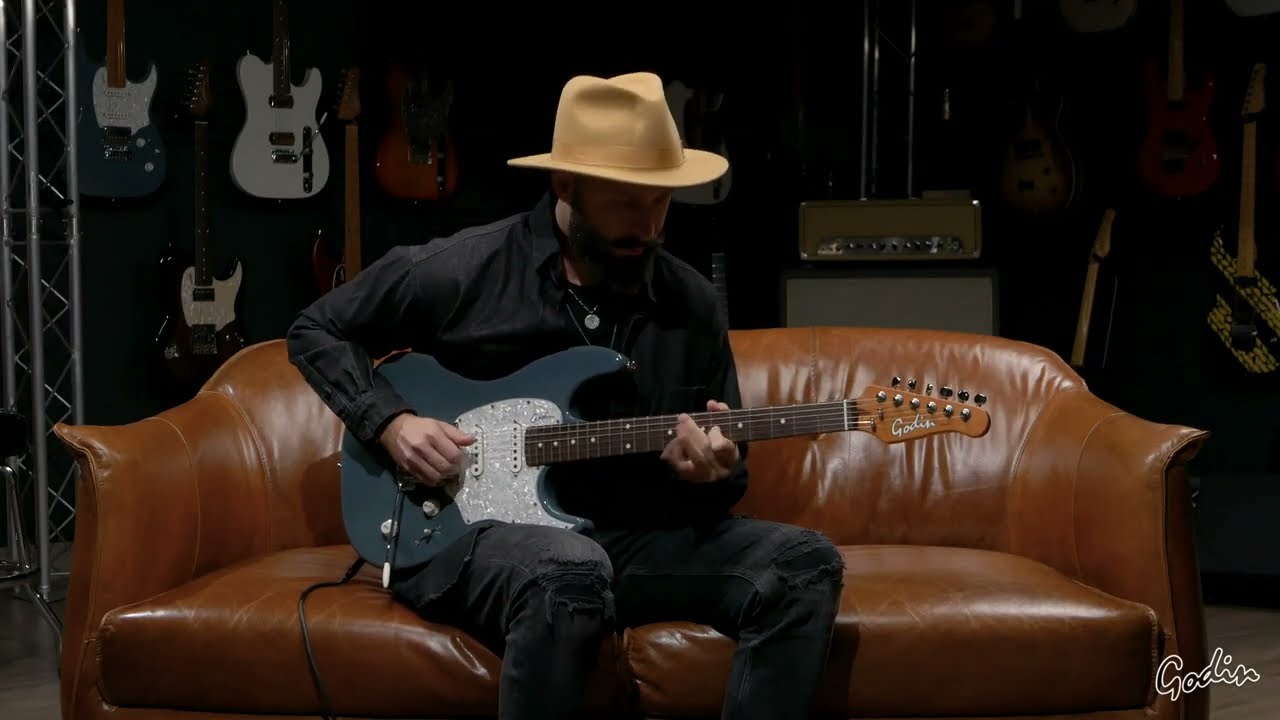
How to choose your Godin Multiac ?
Translation available in Spanish, German and Japanese “I’m really not sure about which Multiac to choose. Could you please help…
Support
Learn more about our technology, craftsmanship, and services.
YES. You can go up or down one gauge, usually without needing to readjust your truss rod, however if you use a much heavier or lighter gauge this will put different amounts of tension on the neck so an adjustment may be needed. When changing string gauge allow some time for the guitar to settle and then if needed have the truss rod adjusted by a qualified technician. Strings for all Art & Lutherie guitars can be found here.
Do not use any wax based products on the guitar, especially on the top! This will cause unwanted wax buildup over time which will impede the top from vibrating. Instead use a small amount of soap based guitar polish sprayed on a cloth (never directly on the guitar) and gently wipe off your guitar. For the fingerboard we suggest removing the strings and applying Lemon or Danish oil to a cloth and then working it into your fingerboard. Let the oil soak in for a few minutes and then wipe off the excess. This should be done once a year on rosewood or ebony fingerboards only. Doing so not only cleans, but conditions your fingerboard against cracking and keeps it from losing its luster.
Since our factories are located in different parts of Quebec, a complete tour would entail about one thousand kilometers of driving and at least a complete weekend. We are hoping to offer tours in the future but at this point we haven’t worked out the logistics.
A truss rod is an adjustable metal rod that sits inside of the neck, underneath the fingerboard. The truss rod is used to adjust for changes in the neck caused by humidity or changing string gauges. Art & Lutherie guitars employ an advanced double function truss system.
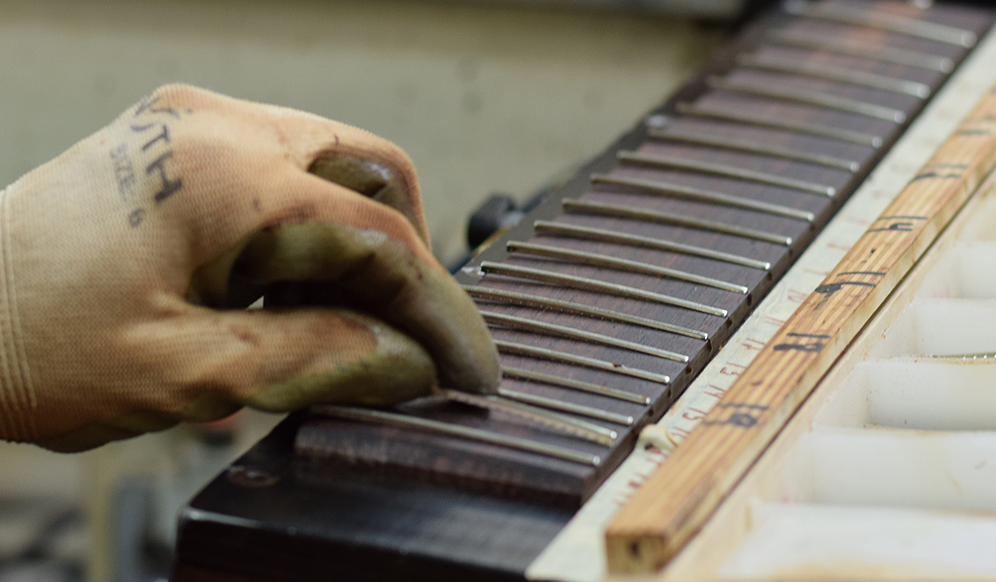
This is not nearly as big a problem as some people make it out to be. Once again the culprit here is humidity. In the case of the protruding fret edges this is because the fingerboard has dried out slightly and shrunk. The frets are metal (nickel/silver) and do not shrink from a change in humidity. The problem is easily fixed by a good guitar tech with a file.
YES. It is a good idea to loosen the strings just enough to reduce tension on the neck. This will avoid extra stress which can cause damage to the headstock if the guitar case is dropped.
Cold-checking refers to that spider web like effect that sometimes occurs in wood finishes that have been subjected to severe temperature changes. It is also common in older instruments where the finish has dried out to the point of becoming brittle. For many years we have worked with our finish supplier to develop a lacquer formula that retains a degree of elasticity and resists cold checking.
Your truss rod should be adjusted when your neck develops a bit of a bow in it. The reason for the bow is a combination of the string tension that is constantly applied to the neck along with changes in relative humidity. Humidity is the most important part of this equation. Wood reacts to changes in relative humidity when it absorbs or loses moisture. Absorbing moisture causes the neck to expand which results in a back-bow in this case loosening the truss rod slightly will allow the neck to return to its original form. When a neck dries out it will under bow, which can be treated by slightly tightening the truss rod.
WARNING: Over adjusting your truss rod can cause irreparable damage to your guitar and therefore truss rod adjustments should only be handled by a qualified guitar technician.
Translation available in Spanish, German and Japanese “I’m really not sure about which Multiac to choose. Could you please help…
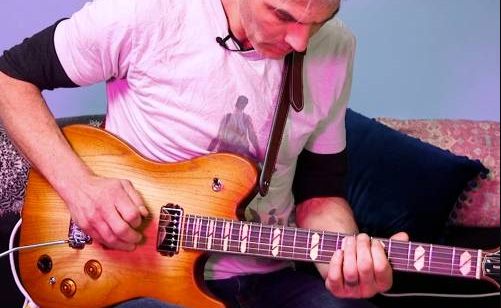
John Bohlinger demos the Godin Radium-X! Showcasing both acoustic and electric tones, this Canadian made guitar could be an ultra-versatile…
Fifty years ago, Robert Godin began handcrafting guitars in a small workshop in Québec, Canada. Since 1972, what started as…